2026 Top Types of Centrifugal Seal Explained for Your Needs?
In the world of industrial engineering, the choice of seals is crucial. A Centrifugal Seal plays a significant role in various applications. Reports show that nearly 40% of companies report seal failures, leading to costly downtimes. This highlights the importance of selecting the right type of centrifugal seal.
As we move toward 2026, understanding the different types of centrifugal seals becomes vital. Industry professionals are encouraged to base their decisions on data-driven insights. Centrifugal seals defend against leaks while ensuring optimal performance. However, the complexity of designs means selecting a suitable type isn't always straightforward.
Many engineers often overlook specific operational needs. This can lead to misapplications and increased maintenance. Research indicates that a significant percentage of seal failures stem from miscalculations in material compatibility and design. Thus, it's essential to delve into the specifics of each centrifugal seal type to make informed choices. Emphasizing knowledge and practical experience will lead to improved efficiency and reliability in operations.

Understanding Centrifugal Seals: An Overview
Centrifugal seals play a crucial role in many industrial applications. They are essential for preventing fluid leakage in pumps and turbines. Understanding these seals can enhance performance and durability in various machinery.
A centrifugal seal functions by using a combination of mechanical principles and pressure differentials. The design typically includes a rotating surface that creates a barrier. This barrier keeps fluids contained while allowing components to move freely. The materials used need to withstand high pressures and temperatures. Thus, choosing the right combination of materials can impact the longevity of the seal.
Common challenges include wear and tear over time. Proper installation is critical, as misalignment can lead to premature failure. Monitoring the condition of seals can prevent costly downtime. Knowing when to replace or service seals is often overlooked but is vital for maintaining efficiency. It’s important to continually assess the performance of seals in your system. This approach can lead to improved reliability and operational savings in the long run.
Applications of Centrifugal Seals in Various Industries
Centrifugal seals are crucial in various industries, serving diverse applications. These seals help prevent leakages and maintain pressure in systems. In the chemical processing industry, for instance, centrifugal seals can withstand high temperatures and aggressive fluids. A recent report indicated that improper sealing can lead to losses up to $5 million annually for large plants.
Oil and gas sectors also rely heavily on these seals. Here, sealing failure can result in significant environmental risks. Studies show that nearly 30% of all leaks in oil platforms are due to inadequate seals. Regular inspections and upgrades of centrifugal seals can mitigate these issues effectively.
Moreover, in the food and beverage industry, sanitary centrifugal seals assure safe product handling. These seals prevent contamination, crucial for consumer safety. Yet, manufacturers often overlook the seal's maintenance, risking food quality. Data shows that improper seal management increases spoilage rates by up to 15%. Thus, understanding and selecting the right centrifugal seal is vital for operational efficiency across sectors.
Factors to Consider When Choosing Centrifugal Seals
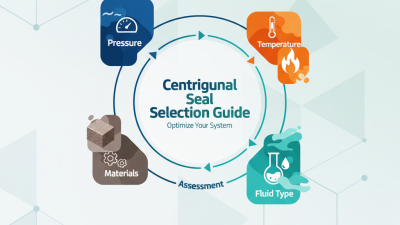
Choosing the right centrifugal seal can be challenging. Various factors influence this decision. The material of the seal is crucial. Different applications may require seals made from specific materials to withstand various pressures and temperatures. Understanding the environment where the seal will operate is essential.
Another factor to consider is the seal's design. The configuration can impact the efficiency of the sealing process. Some designs offer better fluid retention and reduced leakage. Additionally, compatibility with the system is vital. A poorly matched seal can lead to premature failure and costly downtimes.
Price is important, but it is not everything. An inexpensive seal may save money initially, but it could lead to more problems down the line. Reliability is worth the investment. In some cases, a more expensive seal might perform better and last longer. This choice ultimately affects overall operations. Considering all these factors can enhance performance and extend the life of your machinery.
2026 Top Types of Centrifugal Seal Explained for Your Needs
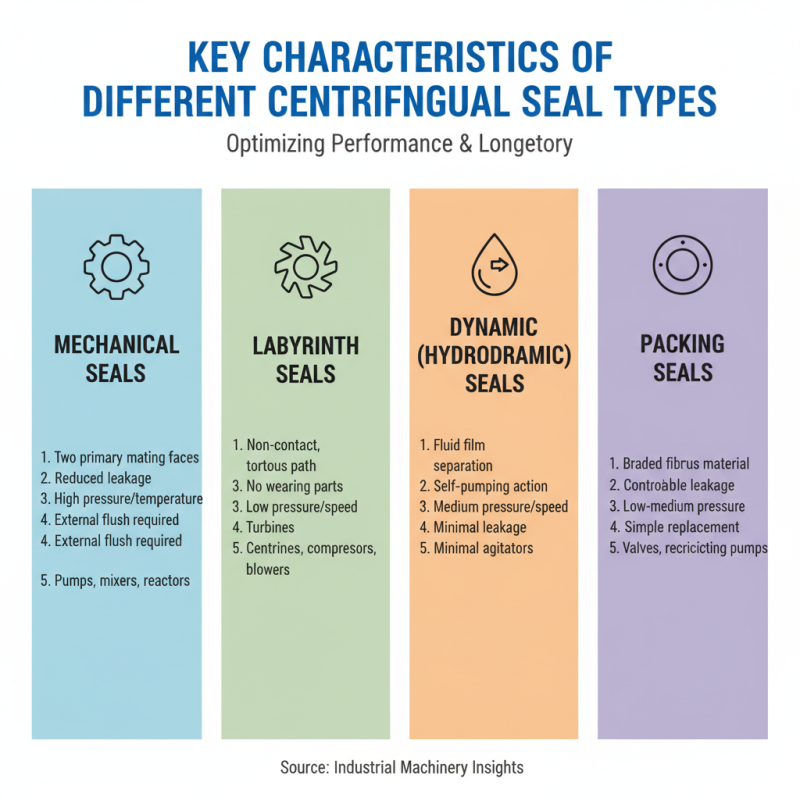
This chart displays the distribution of different types of centrifugal seals based on their application and popularity.
Maintenance Tips for Optimal Performance of Centrifugal Seals
Maintaining centrifugal seals is crucial for ensuring their optimal performance. Regular inspection is a key factor. According to the Pump Industry Analysts report, nearly 30% of seal failures are due to improper maintenance. Checking for leaks, wear, and operational deviations can prevent unexpected downtime.
Temperature control also plays a significant role. Materials used in seals can degrade under extreme heat. The American Society of Mechanical Engineers suggests maintaining operating temperatures within specified limits. Using heat-resistant materials can help extend the life of the seal. Additionally, lubrication should not be overlooked. Proper lubrication reduces friction and minimizes wear, enhancing the seal’s reliability.
Operators should document maintenance activities. Records provide insights into performance and help identify patterns. This practice supports better decision-making for future maintenance schedules. It is essential to remain adaptive. Each seal has unique characteristics based on its application and environment. Continuous evaluation leads to improved maintenance strategies, ensuring efficiency and longevity.
2026 Top Types of Centrifugal Seal Explained for Your Needs
| Seal Type |
Material |
Temperature Range (°C) |
Pressure Range (bar) |
Applications |
| Standard Elastomer Seal |
Nitrile Rubber |
-20 to 100 |
0 to 10 |
Pump Applications, HVAC |
| PTFE Seal |
PTFE (Teflon) |
-50 to 150 |
0 to 25 |
Chemical Pumps, Food Processing |
| Metal Seal |
Stainless Steel |
-100 to 200 |
0 to 50 |
Oil & Gas, High-Pressure Systems |
| Ceramic Seal |
Silicon Carbide |
-50 to 120 |
0 to 16 |
Pulp & Paper, Mining |